
Типовые выражения (обсуждайте, заучивайте и подставляйте свои данные):
| I go to university five days a week and attend classes in the morning. |
| She did a degree in biology and now works as a scientist in a lab. |
| He dropped out of college because he couldn’t afford the tuition fee. |
| My brother is a straight-A student — he always gets good marks and does well in every subject. |
| We take exams at the end of each term, and if you pass, you get a credit. |
| I failed my chemistry exam last year, but this time I’m studying harder. |
| My favourite subjects are history and geography; I hate maths — it’s too challenging! |
| After finishing school, she entered the university to study law. |
| Professors give lectures in big halls, and students take notes in their notebooks using textbooks and workbooks. |
| Higher education is free in some countries, but in others, it’s very expensive. |
| He’s a postgraduate student working on his PhD in the physics department. |
| During break, students chat near their desks or play outside — especially in primary school. |
| College education isn’t the same as higher education — the first usually refers to vocational or community colleges. |
| Jobs in science and technology are in high demand these days. |
| She graduated from university with a master’s degree and now teaches art at a prestigious high school. |
Task: Fill in the blanks
Вставь подходящие слова или фразы из списка Common expressions в правильной форме.
Maria always wanted to become a doctor. She studied hard in (1) ________ and never (2) ________. After she (3) ________ school, she (4) ________ a prestigious medical university. She (5) ________ a degree in biology first, then continued as a (6) ________ student. Now she works in a (7) ________ and hopes to (8) ________ from university with a PhD next year.
Слова для выбора:
graduate, postgraduate, lab, do, attend classes, finish, get, miss classes
Task: Write a short biography
Напиши короткую биографию (6–8 предложений) вымышленного человека, который добился успеха в образовании. Используй минимум 6 выражений из списка Common expressions. Обязательно укажи: где учился, какие предметы любил/не любил, получил ли степень, работает ли сейчас в сфере образования.
Пример начала:
Alex grew up in a small town. He went to primary school locally and loved science and chemistry…
Справочник английской грамматики
Типовые вопросы:
| What subjects did you like most in high school? |
| Have you ever failed an exam? How did you feel? |
| Do you attend classes regularly, or do you sometimes miss classes? |
| What’s the most challenging course you’ve ever done? |
| Did you graduate from university? If yes, what degree did you get? |
| Is higher education free in your country? |
| Who teaches your favourite subject? |
| Have you ever dropped out of a course or college? Why? |
| What do you need to do to enter a prestigious university? |
| Are you a straight-A student, or do you sometimes struggle to get good marks? |
Task: Transform the questions
Перепиши вопросы, изменив их тип или форму, как указано. Это поможет лучше понимать структуру вопросов в английском.
Пример:
Original: Do you attend classes regularly?
→ Make it a negative yes/no question:
Don’t you attend classes regularly?
Теперь сделай то же самое:
- Original: Have you ever failed an exam?
→ Make it a wh-question (ask about the subject): - Original: What subjects did you like most in high school?
→ Make it a present perfect question about experience: - Original: Is higher education free in your country?
→ Make it an indirect question (start with: Could you tell me…): - Original: Did you graduate from university?
→ Make it a tag question: - Original: Are you a straight-A student?
→ Turn it into a question using “ever” in present perfect:
Task: “Would you ask this?” – Question appropriateness
Реши, уместно ли задавать каждый из этих вопросов в указанных ситуациях. Напиши Yes или No, и объясни почему (1–2 предложения).
- You’re talking to a new classmate on the first day of university.
→ Did you drop out of college before?
Answer: ______
Why? ___________________________________________ - You’re interviewing a teacher for a school newspaper.
→ What subjects did you like most in high school?
Answer: ______
Why? ___________________________________________ - You meet someone at a party and want to start a friendly conversation.
→ Are you a straight-A student?
Answer: ______
Why? ___________________________________________
- You’re applying for a scholarship and talking to a committee member.
→ Is higher education free in your country?
Answer: ______
Why? ___________________________________________ - You’re chatting with a friend who looks stressed.
→ Have you ever failed an exam?
Answer: ______
Why? ___________________________________________
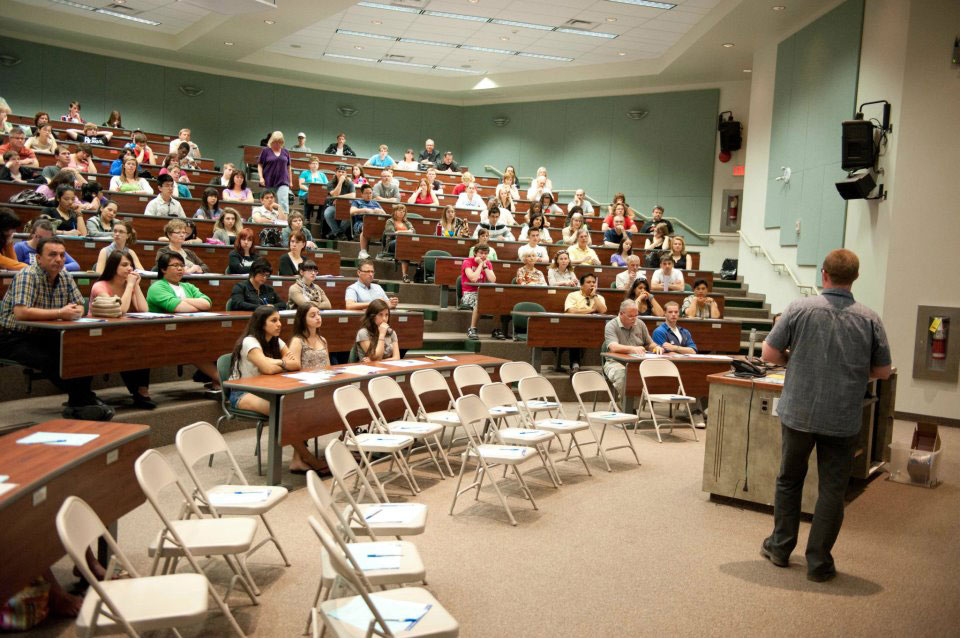
Расскажите, гды вы учились в школе и далее в университете или колледже; какая была ваша специальность и почему вы ее выбрали:
Вопросы для обсуждения:
— Is a university degree still important in today’s job market? Why or why not?
— Should higher education be free for everyone? What are the pros and cons?
— What’s more valuable: practical skills or a formal degree?
— How has education changed since your parents’ time?
— Would you ever consider dropping out of college to start a business or travel? Why or why not?
Video
Reading
The Many Paths of Learning
Education shapes our lives — from learning to read in kindergarten to defending a PhD thesis in a university lab. For many, the journey starts in primary school, continues through high school, and leads to higher education.
Some students are straight-A students who get good marks in every subject — from maths to art. Others find school challenging and may even drop out of college due to stress or financial problems. But success isn’t only about grades. Many people do courses online, learn skills on the job, or return to education as postgraduate students later in life.
In some countries, tuition fees are high, and students graduate with debt. In others, higher education is free, making knowledge accessible to all. Regardless of the path, what matters most is curiosity, effort, and the willingness to keep learning — because education never really ends.